




The Benefits of Systematic CTAs and Professional Algorithmic Asset Management

The Benefits of Systematic CTAs and Professional Algorithmic Asset Management

ALGORITHMIC TRADING.

2/7/20246 min read

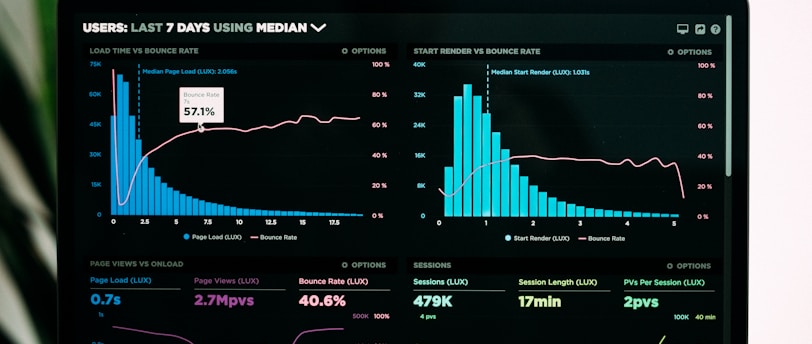
graphs of performance analytics on a laptop screen

The Benefits of Systematic CTAs and Professional Algorithmic Asset Management

Investing in systematic Commodity Trading Advisors (CTAs) and professional algorithmic asset management can offer unique benefits to portfolios of Ultra High Net Worth Individuals (UHNIs), Single Family Offices (SGOs), Multi-Family Offices (MFOs), bank treasuries, endowments, Sovereign Wealth Funds (SWFs), and institutional investors. Systematic strategies, particularly those employed by CTAs, have shown to enhance portfolio performance through diversification, risk management, and unique sources of returns. This article delves into the quantitative advantages of integrating these strategies into alternative investment portfolios, supported by historical data and academic research.

Diversification and Risk Reduction

One of the primary benefits of incorporating systematic CTAs into a portfolio is the significant reduction in risk. John Lintner's seminal work in 1983 demonstrated that portfolios of stocks and bonds, when complemented with managed futures, exhibited substantially lower risk at every level of expected return compared to portfolios solely comprised of stocks and bonds. Lintner's findings have been echoed in subsequent research, confirming that managed futures offer superior diversification benefits.

The advantage of managed futures lies in their ability to produce positive returns during both bull and bear markets. Systematic CTAs employ trend-following strategies that can capitalize on market movements irrespective of direction, providing a hedge against market downturns. This characteristic is particularly valuable for investors seeking to mitigate the impact of equity market volatility on their portfolios.

Superior Risk-Adjusted Returns

Historical data supports the assertion that systematic CTAs deliver superior risk-adjusted returns compared to traditional asset classes. For instance, a representative trend-following strategy on futures prices achieved a Sharpe ratio of 0.74, compared to 0.46 for spot prices. This outperformance is attributed to the ability of futures contracts to offer hedging benefits and liquidity to other market participants, creating profit opportunities for CTAs.

Furthermore, systematic strategies have been shown to outperform discretionary strategies on a risk-adjusted basis. Studies indicate that systematic funds produce higher Sharpe ratios, lower drawdowns, and higher Jensen's alpha compared to discretionary funds. This is largely due to the systematic approach's better management of extreme events and market crises, where they tend to excel.

Unique Sources of Return

The sources of return for managed futures are distinct from those of traditional investments. Futures, swaps, and forward contracts provide exposure to financial and commodity markets with greater liquidity and less market impact. These instruments enable traders to take long and short positions, allowing for dynamic asset allocation within the futures market complex. Additionally, options allow traders to directly trade on market characteristics such as price volatility.

Managed futures strategies are not constrained by the zero-sum game implication often associated with futures markets. Many market participants, such as hedgers, are willing to incur small losses in futures markets to offset risks in their cash market positions. This creates a premium that managed futures strategies can capture by providing hedging and liquidity services.

Empirical Evidence and Performance Metrics

Empirical evidence underscores the robustness of managed futures strategies. From January 2000 to December 2022, the HFRI Macro: Systematic Diversified Index demonstrated an annualized arithmetic mean return of 5.4% with an annualized standard deviation of 7.7%, resulting in a Sharpe ratio of 0.4. In comparison, the MSCI World Equity Index had a higher annualized mean return of 5.7% but with significantly higher volatility (15.7%) and a lower Sharpe ratio of 0.2.

Exhibit 1: Statistical Summary of Returns

Index (Jan. 2000 - Dec. 2022)HFRI Macro: Systematic DiversifiedMSCI World EquityAnnualized Arithmetic Mean5.4%5.7%Annualized Standard Deviation7.7%15.7%Annualized Semivolatility4.3%11.8%Annualized Median4.5%14.2%Skewness0.2-0.6Excess Kurtosis0.01.2Sharpe Ratio0.40.2Sortino Ratio0.70.3Annualized Geometric mean5.1%4.5%First-Order Autocorrelation0.00.1Annualized Standard Deviation (Adjusted for Autocorrelation)7.7%16.8%Maximum6.5%12.8%Minimum-6.4%-19.0%Max Drawdown-13.6%-54.0%

Exhibit 2: Return Distributions

Index (Jan. 2000 - Dec. 2022)HFRI Macro (Total)MSCI World EquityAnnualized Arithmetic Mean4.8%5.7%Annualized Standard Deviation5.1%15.7%Annualized Semivolatility2.9%11.8%Annualized Median4.3%14.2%Skewness0.3-0.6Excess Kurtosis0.51.2Sharpe Ratio0.40.2Sortino Ratio0.80.4Annualized Geometric mean4.7%4.5%First-Order Autocorrelation0.00.1Annualized Standard Deviation (Adjusted for Autocorrelation)5.3%16.8%Maximum5.7%12.8%Minimum-3.7%-19.0%Max Drawdown-8.0%-54.0%

Financial Model: $10 Million Portfolio Allocation

To illustrate the potential impact of including systematic CTAs in a portfolio, consider a financial model for a $10 million portfolio. Assume an initial allocation of 70% to traditional assets (stocks and bonds) and 30% to managed futures. The following table shows the performance metrics based on historical data from 2000 to 2022.

Exhibit 3: Portfolio Performance Metrics

MetricTraditional Portfolio (70%)Managed Futures (30%)Combined PortfolioAnnualized Return5.7%5.4%5.6%Annualized Volatility15.7%7.7%11.3%Sharpe Ratio0.20.40.35Maximum Drawdown-54.0%-13.6%-30.8%

The combined portfolio demonstrates a significant reduction in volatility and drawdown, with a notable improvement in the Sharpe ratio. This model underscores the benefits of diversification and risk management offered by systematic CTAs.

Conclusion

For allocators, UHNIs, SGOs, MFOs, bank treasuries, endowments, SWFs, and institutional investors, incorporating systematic CTAs and professional algorithmic asset management into alternative investment portfolios offers a compelling value proposition. These strategies provide robust diversification, superior risk-adjusted returns, and unique sources of return that traditional assets cannot replicate. The empirical evidence and academic research affirm that systematic CTAs enhance portfolio performance by reducing risk and delivering consistent returns across various market conditions.

If you are interested in exploring investment opportunities in systematic CTAs or quantitative hedge funds, please contact our team at Blockmas. Our expertise in systematic trading can help you achieve your long-term financial goals with optimized portfolio performance and risk management.

How To Invest in a Portfolio of Trading Systems?

Almost all retail traders lose all their money in less than 90 days by applying discretionary trading strategies. Successful traders invest in a decorrelated portfolio of algorithmic trading systems. In this small ebook we dive into how to analyse trading systems, how to invest in them, and how to build a portfolio of institutional grade algorithms.

The Dark Side of Brokers, And How To Win Them.

Most CFD brokers and derivatives firms profit from their clients' losses by being their counterparties and do everything in their power to make them lose their funds as quickly as possible. In this small ebook, our founder, Francisco F. De Troya, who worked for 3 of the largest brokerage firms in the world, exposes how the industry works and how you can really get the best results in the financial markets with algorithmic trading.